
Introduction
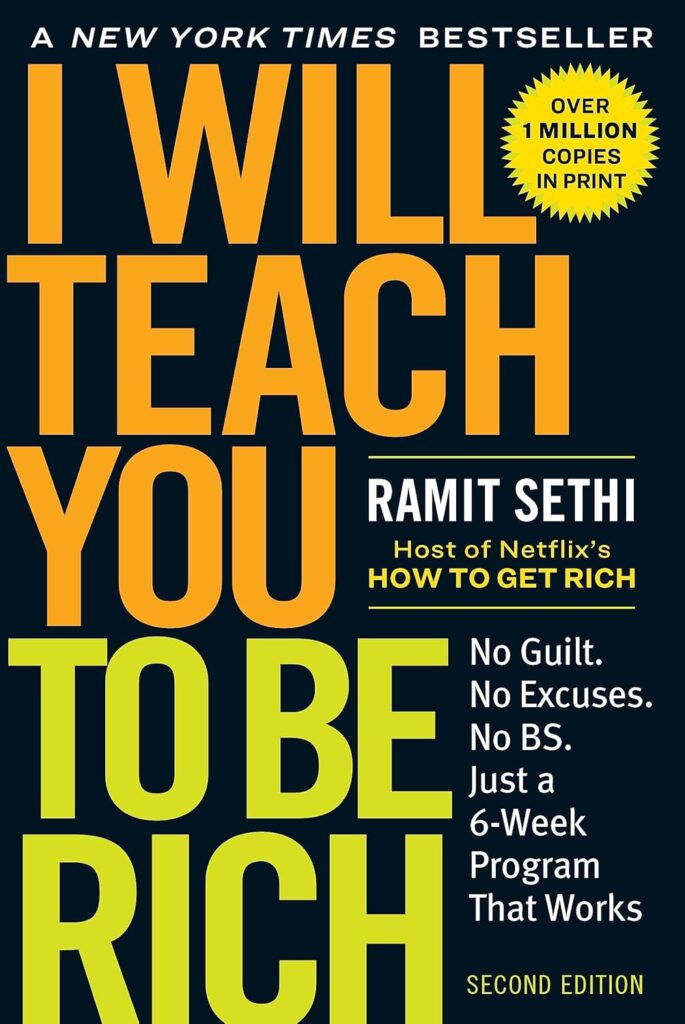
I Will Teach You to Be Rich by Ramit Sethi is a no-nonsense, action-driven personal finance book that focuses on building wealth through smart financial habits, automation, and strategic investing. Unlike traditional finance books that emphasize extreme frugality, Sethi’s approach is about conscious spending—allowing yourself to enjoy life while still making smart financial decisions.
This book is a practical roadmap for young professionals, entrepreneurs, and anyone looking to optimize their finances without giving up the things they love. From eliminating debt and automating savings to investing with confidence, Sethi provides a straightforward and highly actionable plan for achieving long-term wealth.
The Core Philosophy of I Will Teach You to Be Rich
Sethi’s approach to wealth-building is refreshingly different from traditional personal finance advice. Rather than focusing on penny-pinching or depriving yourself of lattes, he emphasizes the importance of big wins—the key financial decisions that have the greatest impact over time.
His philosophy revolves around four main principles:
- Automate your finances so that saving, investing, and bill payments happen effortlessly.
- Spend consciously on things you love while ruthlessly cutting costs on things that don’t matter to you.
- Invest early and wisely in low-cost index funds, avoiding complex strategies that often fail.
- Negotiate like a pro to lower costs on major expenses like rent, credit card interest rates, and bills.
Unlike other personal finance books that focus on restrictive budgets, Sethi wants readers to design a rich life that includes guilt-free spending—provided they are making the right financial moves.
The Importance of Automation and Conscious Spending
A key takeaway from I Will Teach You to Be Rich is the power of automation. Many people struggle with budgeting because it requires constant effort and discipline. Sethi’s solution? Automate everything—your savings, investments, bill payments, and even spending money.
By setting up automatic transfers to savings and investment accounts, you remove the need for willpower. Instead of relying on discipline to save each month, your finances are structured in a way that ensures money is working for you behind the scenes.
The second major concept is conscious spending. Traditional budgeting often feels restrictive, but Sethi encourages readers to spend extravagantly on things they love while cutting mercilessly on things they don’t care about. This means if you love travel, allocate money toward it, but cut back on mindless spending like subscriptions you don’t use or impulse purchases.
This mindset shift transforms money management from being about restriction to being about intelligent prioritization.
Investing for Long-Term Wealth
Sethi’s investment philosophy is refreshingly simple and directly challenges the fear and confusion that many people have about investing. He advises against trying to “beat the market” and instead recommends a low-maintenance, high-return strategy: investing in low-cost index funds.
According to Sethi, many people make investing overly complicated, but true wealth is built by following a simple, long-term approach. He advocates for:
- Investing early and consistently, even if it’s a small amount.
- Choosing low-cost index funds like those offered by Vanguard, rather than actively managed funds.
- Automating investments so that money is consistently put to work without emotional decision-making.
- Ignoring daily stock market fluctuations and focusing on long-term growth.
This strategy allows anyone—regardless of income level—to build wealth passively and reliably over time.
Eliminating Debt and Optimizing Credit Cards
A major hurdle for many individuals is debt management. Instead of using generic advice like “just spend less,” Sethi provides a step-by-step method for eliminating high-interest debt while still allowing yourself to enjoy life.
He encourages readers to prioritize high-interest debt (like credit cards) using the snowball or avalanche method, and at the same time, leverage credit card rewards, perks, and low-interest offers to their advantage.
Unlike most financial gurus who advocate avoiding credit cards, Sethi argues that when used correctly, credit cards can be a powerful tool for building wealth, earning travel rewards, and increasing financial flexibility.
The Psychology of Money and Behavioral Change
One of the book’s most powerful insights is the psychological aspect of money management. Many people struggle with finances not because they lack knowledge but because they have limiting beliefs or unhealthy spending habits.
Sethi integrates behavioral psychology into his financial strategies, helping readers reframe how they think about money. He emphasizes that small changes—like setting up automatic savings or negotiating better deals—can create significant financial improvements over time.
Instead of shaming people for bad financial habits, he provides practical strategies to help rewire their financial mindset and take action.
Applying I Will Teach You to Be Rich in Today’s World
The beauty of Sethi’s system is that it works for people of all income levels and lifestyles. Whether you’re an entrepreneur, a freelancer, or a 9-to-5 employee, his approach can be tailored to fit your financial situation.
For those looking to build passive income, his automation and investing principles align perfectly with modern online business models, such as:
- Setting up automated payments for affiliate marketing earnings, digital product sales, or investment accounts.
- Using conscious spending principles to reinvest in high-value skills or income-generating assets.
- Leveraging credit card perks and rewards for business expenses, travel hacking, and optimizing cash flow.
By following these steps, readers can gradually shift from financial uncertainty to full control over their wealth.
Conclusion
I Will Teach You to Be Rich is a game-changing personal finance book that simplifies money management while allowing for an enjoyable lifestyle. Sethi’s core message is that financial success isn’t about deprivation—it’s about making smarter choices with money.
By automating finances, prioritizing big wins, investing wisely, and using psychology to change financial behaviors, anyone can create a rich life on their terms.
If you’re looking for a straightforward, actionable financial plan that doesn’t involve sacrificing your daily joys, this book is a must-read.
What’s next?
👉 Want to discover more powerful financial strategies? Check out The 3 Most Important Lessons from the Best Investment and Financial Growth Books to see how this book compares to other game-changing money guides.