
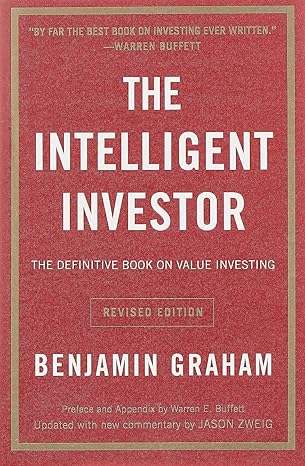
The Intelligent Investor by Benjamin Graham is considered the Bible of investing. First published in 1949, its principles remain highly relevant today. Graham, a professor and investor, introduced value investing, a strategy focused on buying stocks that are undervalued compared to their intrinsic worth.
Unlike books that promise quick wealth, The Intelligent Investor emphasizes long-term discipline, risk management, and rational decision-making. Warren Buffett himself credits this book as the foundation of his investing philosophy.
Below is a deep dive into the core lessons and insights that make this book a must-read for serious investors.
1. The Difference Between Investing and Speculating
Graham makes a crucial distinction between an investor versus a speculator. An investor carefully analyzes businesses, seeks a margin of safety, and holds long-term. A speculator bets on short-term price movements, follows market hype, and lacks fundamental analysis.
True investing focuses on business fundamentals, not stock price trends. Many traders think they are investing, but in reality, they are just gambling on market sentiment. Stops chasing hot stocks or market fads. Make rational, data-driven decision-making over emotional trading.
2. The Concept of “Mr. Market” – Controlling Emotions in Investing
One of the book’s most famous ideas is Mr. Market, an imaginary character representing the stock market’s irrationality. Some days, Mr. Market is overly optimistic, pricing stocks too high. Other days, he is pessimistic, selling stocks at a discount. Our job as investors is to stay rational and take advantage of his mood swings, not be influenced by Mr. Market.
Markets are emotional, but we don’t have to be. Buy undervalued stocks when the market is fearful, and sell when it is overly greedy. This Prevents panic-selling during market crashes and helps spot opportunities when stocks are underpriced. We need to encourage long-term thinking over daily price fluctuations.
3. The Margin of Safety – Protecting Your Investments
Graham’s “Margin of Safety” is a crucial risk management principle. It means buying stocks for less than their intrinsic value so that even if our analysis is slightly wrong, we won’t suffer catastrophic losses. If a company is worth $100 per share, don’t buy at $100—wait for an opportunity to buy at $70 or less. This reduces risk and increases potential returns.
Following the “Margin of Safety” ensures we don’t overpay for stocks, reducing downside risk. It encourages patient, value-based investing over chasing expensive, hyped-up stocks. And lastly it helps avoid investing in companies with weak financials or unsustainable growth.
4. The Defensive Investor vs. Enterprising Investor – Choose Your Path
Graham describes two types of investors, each with a different level of effort required:
Defensive Investor (Passive Approach)
- Seeks steady, low-risk returns.
- Invests in diversified index funds or blue-chip stocks.
- Prioritizes wealth preservation over high returns.
- Best for: Long-term investors who don’t want to spend too much time analyzing stocks.
Enterprising Investor (Active Approach)
- Willing to research, analyze, and find undervalued stocks.
- Looks for hidden opportunities in the market.
- Requires discipline, time, and effort to find mispriced securities.
- Best for: Those passionate about investing and willing to put in the work.
Knowing the two type of investors helps us choose an investment strategy that fits your personality and time commitment. It also prevents taking unnecessary risks if we’re not ready for active investing.
5. The Importance of Diversification – Avoiding Overconcentration
Graham strongly advocates diversification to reduce risk. Instead of putting all your money into one stock Graham recommends Investing in a broad mix of strong companies. Holding both stocks and bonds to balance risk and reward.
Even the best investors make mistakes—diversification prevents one bad decision from wiping out your portfolio. Diversification protects our wealth from unexpected downturns in a single company or sector and helps us build a balanced portfolio that withstands market volatility.
6. Stock Market History – Learning from the Past
Graham emphasizes the importance of studying financial history. Markets go through cycles of booms and crashes, and understanding past trends helps investors avoid repeating mistakes. Greedy investors ignore history and get burned. Smart investors learn from past crashes to make better decisions. Learning from market history helps us identify bubbles before they burst.
7. Investing vs. Trading – The Power of Patience
Graham warns against short-term trading strategies, as they often lead to losses. Instead, he suggests:
- Buying quality stocks and holding for years, not days.
- Reinvesting dividends to maximize long-term returns.
- Ignoring short-term noise and focusing on business fundamentals.
Successful investing is about patience, not constant action.
Final Thoughts: Why This Book Can Transform Your Investment Strategy
The Intelligent Investor is not a get-rich-quick book. Instead, it teaches a proven, disciplined approach to investing that reduces risk and increases long-term success.
Who Should Read This Book?
- Beginners → To develop a solid foundation in investing.
- Long-term investors → To build discipline and patience.
- Anyone serious about wealth-building → To understand value investing and risk management.
By applying these lessons, you protect yourself from financial mistakes, grow wealth consistently, and develop a smart investing strategy that stands the test of time.